Explore European highlights from our Skills-First Report here.

New research
Skills-First: Reimagining the Labor Market and Breaking Down Barriers
Skills-First: Reimagining the Labor Market and Breaking Down Barriers
Building a more resilient workforce through a skills-first approach.
As world markets continue to adjust, governments and businesses need to remain agile and adapt — or risk missing out on significant opportunities that positively impact companies, the economy, and society. New LinkedIn data reveals how a skills-first approach to the labor market, in which people are hired based on skills rather than degrees or certification, can help policymakers and governments create initiatives that strengthen the workforce — while businesses worldwide can benefit from more diverse talent pools and more equitable hiring processes.
Here’s a preview of what you’ll find in the global report.
Expanding opportunities and democratizing access to jobs
A skills-first approach to hiring paves the way for a more robust and diverse group of candidates.
Skills-first hiring allows companies to keep pace with the changing nature of work. As the necessary skills for jobs evolve, companies can continue to target candidates based on new and dynamic skills requirements rather than static job titles.

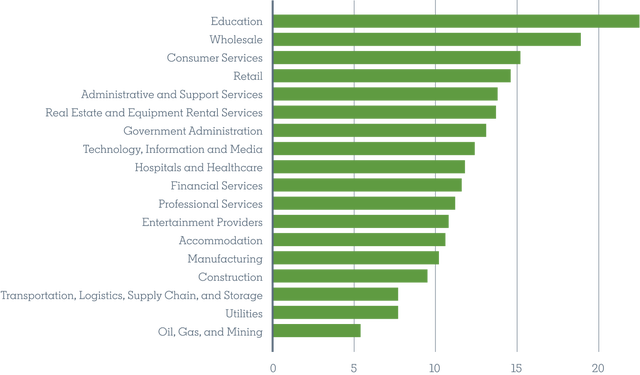
Talent pools expand on average nearly 10x when using a skills-first approach. Download the report to learn more.
Talent pool size increase per industry when using a skills-first approach versus hiring based on job title only.

Finding opportunities in overlooked candidates
A skills-first approach to hiring paves the way for a more robust and diverse group of candidates.
By focusing on candidates’ skills instead of their previous job titles, companies can increase their candidate pools to include more gender representation, younger workers, and equitability.

Globally, skills-first hiring increases candidate pools of workers without bachelor’s degrees by 9% more than candidate pools of workers with degrees.

In jobs where women are underrepresented, a skills-first approach to hiring can increase the proportion of women in candidate pools by 24% more than it would for men.

Skills-first hiring increases candidate pools for Gen Z workers by over 10x. Gen X and Millennial candidate pools increase by 8.5x and 9x, respectively.
Together, we can accelerate the transition to a skills-first approach
Download the full report to view specific recommendations across these roles.



Get the complete LinkedIn Skills-First report.
Explore interactive data that shows how a skills-first approach can expand and diversify talent pools.
Additional resources